

Football Shirts VS The Environment: EXPLAINED

Updated: Dec 5, 2022
An introduction into the damages of the mainstream polyester football shirt, and an introduction to the initiatives looking to making a difference.
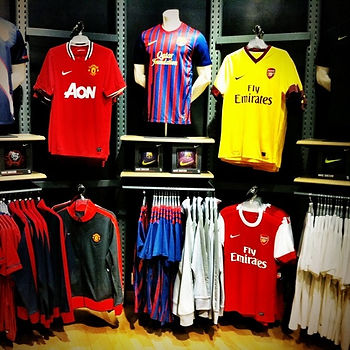
Welcome to the first blog post of Football Shirts VS The Environment.
It would only make sense to explain the necessity, and inform you of the concerns, behind this audio documentary.
One key area of concern are the microfibres released from football shirts. To put into scale the severity of this problem, here are two quick statistics.
Statistics provided by Statista show that across Europe's top 10 football clubs, 18,259,000 football shirts were sold. Now, it is estimated that every time a single football jersey goes through your washing machine, 496,030 microfibres are released into our waterways and consequently into our oceans. If you put this multiplication into a calculator, you will get an unfathomable number.

Microfibres are released via the washing machine as a result of the predominant material used in the manufacturing of football shirts, polyester. Polyester is a material which does not biodegrade, and these microfibres are hugely damaging to the marine life within our oceans and support the increasingly worsening situation of plastic pollution in our waters around the world. In light of this problem, you will be hearing from experts in the environmental community about the problems microfibres and polyester pose. But this documentary is not only to provide an element of concern, but to also provide hope. To tackle this issue, a new creative innovation has come on to the scene; the microfibre filter. The documentary will feature a researcher on this creative invention to provide listeners with hope, and to encourage people to act upon these great inventions that help our environment.
The second of the two concerns that will be explored in this documentary will be looking into the need for EcoKits. It now should be common knowledge that plastic pollution across the globe is a serious issue when talking about damages to our environment.

The organisation for Economic and Co-operation and Development stated that from February 2022, only 9% of plastic waste is successfully recycled. This is a serious concern in which action is needed to increase that 9% to a steep upwards trajectory.
This is when we welcome the EcoKit initiative.
The idea behind an EcoKit is that the material used is predominantly recycled plastic (rPET). Rather than extracting and putting more plastic into the never ending cycle of plastic pollution, EcoKits look to raise that figure of plastic waste being successfully recycled.
Big boys Nike and Adidas have recently put forward their EcoKits to help tackle the issue, however many football clubs across the world are not able to match the costs required to be a client of Nike or Adidas, let alone for their EcoKits which numerically do cost more to produce.
But as I've tried to emphasise throughout, we should feel hope for the future and put a spotlight on those looking to make a difference. Therefore, it is time to introduce Hope and Glory Sportswear.
Hope and Glory Sportswear are a kit manufacturer based in the Greater Manchester Area, who introduced their EcoKit in the 2020/21 season. With their unique designs and determination to contribute to the football community, Hope and Glory are looking to make a difference in the environmental sphere too.
In using rPET as the predominant material in a football kit, the carbon footprint is massively reduced when looking at the manufacturing process. In comparing rPET against plastic, 90% less water is used, the carbon footprint is reduced by 65% and 70% less energy is required when looking the differences when used for a football shirt. This in combination with the reduction of plastic coming into circulation is hugely beneficial for our environment.
Their ultimate goal when introducing the EcoKit is to make being environmentally friendly more affordable for those clubs further down the football pyramid. As good as it is for mainstream manufacturers Nike and Adidas to begin EcoKit initiatives, their high costs mean clubs without the financial flex as those in the top divisions means the progress is too slow.
Recycled plastic kits should become part of a wide scale transformation in the football community to become environmentally friendly. That is the work of Hope and Glory Sportswear, and more about their efforts will come.
Thank you for reading the explainer and first blog post of Football Shirts VS The Environment. Content will be coming throughout the production process as we build up to the release date 15th December. So be sure to keep your eyes peeled for exclusive content from Football Shirts VS The Environment.

Comments